+852 3594 6776

Your Needs   Our Focus

Financial Bulletin

Bank of America: Emerging markets will witness more "capital inflows" early next year

David Hauner, the head of the bank's global emerging markets fixed income strategy, said that even small-scale diversified capital flows from the United States will have a significant impact on emerging markets. Emerging market bonds have delivered a return of nearly 9% for investors this year, surpassing the 7.5% increase of developed market bonds over the same period, according to Bloomberg indicators. The US dollar index has dropped by more than 8% this year and is on track to record its biggest annual decline since 2017. The Federal Reserve's expectation of resuming interest rate cuts this month, coupled with concerns over Trump's tariffs and fiscal policies, is dragging down the performance of the US dollar. According to data from the Commodity Futures Trading Commission, as of the week ending September 2, hedge funds and other speculative investors placed approximately $5 billion in bearish bets on the US dollar. These investors have held a negative position in the US dollar since the beginning of April. Bank of America maintains an optimistic view of emerging markets, a position it has held since the first quarter. Hauner pointed out that emerging market asset classes will be supported by the weakening of the US dollar, the space for further interest rate cuts by local central banks, and the historically low allocation of global funds. Brazil, Mexico and others will be the main beneficiaries Analysts predict that those global funds that previously remained on the sidelines will increase their investment in developing markets, helping emerging markets gain an edge in competition with developed markets. The market involves risks. Please invest with caution. This article does not constitute personal investment advice and has not taken into account the individual user's specific investment objectives, financial situation or needs. Users should consider whether any opinions, views or conclusions in this article are suitable for their specific circumstances. Any investment made based on this is at your own risk.

2025-09-15
View details
Is the era of all-weather trading coming? Blackrock explores tokenization of ETFs

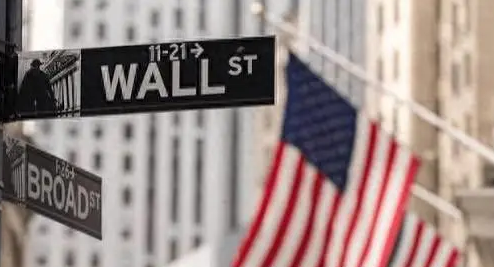
On September 12th, Bloomberg reported that informed sources revealed that the company is studying how to tokenize funds linked to real-world assets such as stocks. Blackrock has had a successful precedent in the field of digital assets before. It is reported that the tokenization of ETFs may bring about changes such as extended trading hours beyond the regular hours of Wall Street, easier access to US products for overseas investors, and new uses as collateral in crypto networks. The core advantages of tokenization technology In addition, tokenization can also make American financial products more accessible to overseas investors and create potential new uses as collateral in the crypto network. Blackrock has always been an active promoter of digital assets. In addition to the BUIDL fund, the company has also tested tokenized fund share trading on jpmorgan Chase's Onyx (now known as Kinexys) infrastructure and positioned itself as an early adopter of digital settlement models. Interest in tokenization within the industry is on the rise. Money market funds from companies such as Franklin Templeton and BlackRock have paved the way for this, and ETFs, as relatively flexible investment tools already designed, may become the testing ground for this transformation. Facing settlement system and regulatory challenges However, the regulatory environment is becoming more lenient. During the Trump era, policymakers were open to projects that allowed companies to test blockchain-based markets in controlled environments. According to a previous article by Jianwen, the CEO of Nasdaq has recently publicly stated that Nasdaq will move towards tokenization of stocks, directly embedding blockchain technology into the core securities trading system, rather than being limited to over-the-counter or affiliated markets. Trading hours will gradually move towards five days a week, 24 hours a day, or even seven days a day in the future. Risk Warning and Disclaimer

2025-09-12
View details
When the Federal Reserve is "extremely dovish", the possibility of gold and the US stock market rising together is underestimated

According to the Chuifeng Trading Desk, Derome Robinson, an analyst at Citigroup, and his team recently released a research report stating that during the "reflation" period when the Federal Reserve's policy stance tends to be dovish, the positive correlation between gold and risky assets such as stocks will significantly increase, and their prices often rise in tandem. However, the current market's pricing of this correlation is clearly insufficient. Against such a macro backdrop, the historical linkage pattern between gold and risky assets is making a comeback. Citigroup's analysis shows that the six-month implied correlation between gold and risky assets such as the S&P 500 index currently reflected in the options market is far lower than what actually occurs in a similar dovish environment. The report says it "looks cheap". Market pricing indicates that the Federal Reserve is clearly dovish The report indicates that the indicator is currently at a low level, suggesting that the Fed's pricing is "overly loose" relative to the fundamentals. In this policy-driven "fiscal domination" environment, the correlations among assets will undergo a systematic transformation. Citigroup pointed out that the correlation between gold and risky assets (such as the S&P 500 index and the Nikkei Index) as well as risky currencies (such as the Australian dollar and the British pound) often becomes more positive than the implicit pricing in the market. Therefore, Citigroup tends to view gold as a tool to hedge against "higher term premiums or policy failures". Based on this logic, the report holds that the combination of "rising gold + rising stocks" is reasonable. The market involves risks. Please invest with caution. This article does not constitute personal investment advice and has not taken into account the individual user's specific investment objectives, financial situation or needs. Users should consider whether any opinions, views or conclusions in this article are suitable for their specific circumstances. Any investment made based on this is at your own risk.

2025-09-11
View details
Why did Alibaba ask Autonavi to

This move is interpreted as another significant move by Alibaba to enter the local life service market following Taobao Flash Purchase. China News Service and Jwnews learned that before Alibaba's business adjustment was made public on the 10th, the confidentiality was quite high. Many media outlets mentioned keywords such as "in-store", "restarting Koubei", and "group buying" in related reports. On the 9th, China News Service and Jwnews learned from informed sources that this major business release is related to "Autonavi's in-store business", rather than "restarting Koubei". Gaode introduced that when users open the "Street Sweeping List", they will see rankings corresponding to different types of behaviors, including the "Tire Wear List" that shows long-distance special trips, the "Repeat Customer List" that shows multiple visits, as well as various rankings such as local favorites, city characteristic experiences, and high-scoring fireworks stores. Each category will be updated daily based on dynamic data. On the evening of August 29th, during Alibaba's first-quarter 2026 fiscal year analyst conference call, Jiang Fan, CEO of Alibaba's E-commerce Business Group, stated that the Taobao Flash Purchase business has reached a certain scale, with approximately 150 million active users every day. Among these users, some have the need for in-store pickup or in-store group buying. Therefore, Alibaba will start from the perspective of meeting users' demands, especially considering the synergy with offline home delivery services, to provide users with more diverse services. He disclosed that currently, Alibaba is also conducting tests and explorations of in-store business in some cities. Public information shows that in 2008, Alibaba fully acquired Koubei.com. In 2009, Alibaba upgraded its "Greater Taobao" strategy, and Koubei.com was merged into Taobao. On April 2, 2018, Alibaba fully acquired Ele.me. In October of the same year, Alibaba announced the official establishment of a local life service company, which was formed by the merger of the two major businesses of Ele.me and Koubei. Rolling back the clock to 2013, at that time, Alibaba invested in Autonavi and obtained a 28% stake. Immediately following 2014, Alibaba completed the full acquisition of Autonavi for 1.1 billion US dollars. After the acquisition was completed, Autonavi delisted from Nasdaq and gradually integrated into Alibaba's ecosystem. At that time, the acquisition of Autonavi was also regarded as a key move for Alibaba to lay out the mobile Internet and O2O markets. According to multiple media reports, on March 22, 2023, Autonavi held an internal meeting and announced the official merger with Ele.me's in-store business (formerly Koubei) under Alibaba's local life services division. In the future, all the local life in-store businesses under Alibaba will be uniformly integrated into Autonavi. Alibaba's financial report for the first quarter and the full year of 2023 disclosed that in June 2022, the average daily active users of Autonavi exceeded 120 million. In terms of the local life business, Alibaba has repeatedly mentioned the overall performance of its in-store business in its financial reports. As mentioned in the third-quarter financial report of fiscal year 2024, the revenue of the local life group increased by 13% year-on-year, and the overall orders increased by more than 20% year-on-year. The first-quarter financial report of fiscal year 2025 mentioned that the orders of Autonavi and Ele.me have increased, operational efficiency has improved, and business scale has expanded... Alibaba's third-quarter financial report for fiscal year 2025 released at the beginning of this year shows that Autonavi Map has made a significant breakthrough and achieved its first profit. On August 29th, Alibaba released its first-quarter financial report for the fiscal year 2026, which mentioned that for the three months ending June 30, 2025, the revenue of its "instant retail" business was 14.784 billion yuan, a year-on-year increase of 12%, mainly due to the growth in order volume brought about by the launch of "Taobao Flash Purchase" at the end of April 2025. In the competition of local life in-store business, Meituan, as the defending champion, has a leading market share advantage. It is worth noting that on the very day the "Gaode Street Sweeping List" was released, Meituan officially announced that Dianping would "restart" quality food delivery. In Meituan's introduction, it is also mentioned that "large model empowerment" - it will use its self-developed large model for the B-end, combined with a vast amount of real evaluation data to analyze user needs, further eliminate non-real review data, and provide reliable decision-making for users with "AI+ real high scores". Zhang Yi, CEO and chief analyst of iiMedia Research, told China News Service and Jwnews that there are multiple factors contributing to Alibaba's current push into in-store business. On the one hand, the scale of China's local life consumption market is continuously expanding, while pure online business has actually reached a bottleneck period. Coupled with Meituan's "far ahead" in the local life service market and Douyin's share of the pie, Alibaba's move is not only to compete for market share but also to better develop its online moat. On the other hand, Autonavi has the advantages of high-frequency traffic and platform, which can activate the in-store business and have a good expectation and synergy effect. What advantages does Alibaba have in the face of market defenders? Zhang Yi believes that Alibaba's strength lies in its relatively comprehensive ecosystem, including payment, e-commerce, maps and other integrated systems, which can provide rich traffic entry points and user data for in-store business. For Alibaba, the future operational direction of its in-store business is of great significance. A previous report released by iiMedia Research predicted that the market size of online food delivery services would reach 1,746.9 billion yuan in 2025, and the scale of local life services would exceed 2.5 trillion yuan in 2025. However, no matter how these Internet giants adjust their businesses, for consumers, getting benefits and convenience is what they care about most. As for the subsidies that consumers are concerned about, Ma Jihua said, "Subsidies are inevitable, but they will definitely be more precise and not be a flood of money." On the day the "Gaode Street Sweeping List" was released, Gaode announced the launch of the "Fireworks Good Store Support Plan", offering generous subsidies in three aspects to encourage users to consume in stores. In terms of transaction subsidies, Autonavi Map will issue 950 million yuan worth of consumption vouchers to encourage users to visit the Fireworks Good Store to experience high-quality services, including in-store coupons and discounts on signature dishes. All costs will be borne by the platform. The market involves risks. Please invest with caution. This article does not constitute personal investment advice and has not taken into account the individual user's specific investment objectives, financial situation or needs. Users should consider whether any opinions, views or conclusions in this article are suitable for their specific circumstances. Any investment made based on this is at your own risk.

2025-09-10
View details
Goldman Sachs also came to cool AI: AI adoption trend is slowing down.

According to a report released by Jan Hatzius, chief economist of Goldman Sachs, on September 8th, although investment in AI hardware is still accelerating, the growth rate of AI adoption by US enterprises has slowed down in the third quarter. The report also shows that the adoption rate of AI in industries such as finance and real estate has increased the most, while that in the education service sector has declined. In terms of the labor market, Goldman Sachs believes that the impact remains "mild", but job substitution has already emerged in areas such as technology, design and customer service. Since the last update, layoffs caused by AI have affected 10,375 workers. More worrying than the "slowdown in growth" revealed in the Goldman Sachs report is that the adoption rate of AI by large enterprises may have peaked and started to decline. This trend may indicate that after an initial period of enthusiastic attempts, large enterprises are entering a "period of technological disillusionment", beginning to reevaluate the practical value and integration challenges of AI tools. The fundamental reason why enterprises encounter obstacles in adopting AI might be found in the MIT report that triggered the market crash earlier. A report titled "The Generative AI Gap: The State of Business AI in 2025" found that as many as 95% of enterprises have a return of zero on their generative AI investments. Market panic may spread For investors, a series of signals, from Goldman Sachs '" slowdown in growth "to Apollo's" decline in adoption rate ", and then to MIT's revelation of the "zero return" predicament, clearly indicate that the commercialization path of AI is far more complex and lengthy than expected. Against the backdrop that the expected price-earnings ratio of the Nasdaq 100 index is still nearly one-third higher than the long-term average, investors need to shift their focus from the frenzied pursuit of technological breakthroughs to a cautious assessment of the actual implementation capabilities and profitability of enterprises. The market involves risks. Please invest with caution. This article does not constitute personal investment advice and has not taken into account the individual user's specific investment objectives, financial situation or needs. Users should consider whether any opinions, views or conclusions in this article are suitable for their specific circumstances. Any investment made based on this is at your own risk.

2025-09-09
View details
Alibaba Cloud has made its first move into embodied intelligence, leading a 1 billion yuan independent investment in a robot startup

On Monday, X Square Robot released A statement saying that the Shenzhen-based startup has raised 1 billion yuan (about 140 million US dollars) in a new round of A+ financing, which was jointly led by Alibaba's cloud business unit and China Science and Technology Investment. The investor lineup for this round of financing is strong. Besides the leading investors Alibaba Cloud and China Science and Technology Investment, it also attracted the participation of Sequoia China (HSG), INCE Capital and Legend Capital. The company's existing investors, Meituan and Legend Star, also continued to follow up with their investments. This round of investment comes at a time when venture capital is flocking into the humanoid robot sector. The market generally expects that the combination of generative AI and robots will completely transform the way humans interact with machines and give rise to a new generation of smarter robots. At the same time as announcing the financing, Variable also released its open-source embodied intelligence basic model named "Wall-OSS" on Monday, aiming to build an open ecosystem around embodied intelligence and accelerate technological iteration. This move is also regarded as a direct confrontation with Physical Intelligence, in which OpenAI has participated in the investment. Citigroup predicts that by 2050, the global robot market size will reach 7 trillion US dollars, and its huge market potential has attracted a large amount of capital, including government-backed funds. Although emphasizing software, independent variables have also launched physical products. According to the information on its official website, the company's products include two wheeled robots and one mechanical arm. At present, the company has not yet delivered any products to the mass market, but it has achieved revenue by selling products to customers such as schools, hotels and nursing homes. When talking about future plans, Yang Qian said that the company has been in talks with clients in Japan and Singapore and plans to start preparing for an IPO next year, but the listing location has not yet been determined. Yang Qian believes that for robots to truly enter the consumer market, their prices need to drop to around $10,000, which may be achieved within the next three to five years through the reduction of hardware costs. In terms of core components, she disclosed that the company uses NVIDIA chips for computing, but only requires lower-performance automotive-grade chips that can be purchased domestically for other functions. The market involves risks. Please invest with caution. This article does not constitute personal investment advice and has not taken into account the individual user's specific investment objectives, financial situation or needs. Users should consider whether any opinions, views or conclusions in this article are suitable for their specific circumstances. Any investment made based on this is at your own risk.

2025-09-08
View details
Selling PE assets to individual users! Wall Street is forming alliances and launching a new round of wealth battles

Traditional asset management giants and private equity investment institutions are accelerating their integration to compete for the emerging market of individual investors. Goldman Sachs announced on Thursday that it has reached a strategic investment agreement of up to $1 billion with the US asset management company T Rowe Price. The two sides will jointly promote private market investment products to retail investors and wealth management clients. According to the statement, Goldman Sachs will purchase shares of Presley in the open market, with an expected shareholding ratio of up to 3.5%, thus becoming one of the latter's largest shareholders. Two institutions plan to offer target-date funds and model portfolios to investment advisors. These products will be a mixed allocation of publicly traded stocks, bonds, and non-publicly traded private market assets. After the news was announced, the market responded positively. Presse's share price rose by 5.8% at the close of trading on Thursday, and Goldman Sachs 'share price also increased by 2.5% in tandem. The giants join forces, targeting personal wealth The collaboration between Goldman Sachs and Presse provides a new model for how Wall Street packages complex private equity assets and sells them to individual investors. For Goldman Sachs, this move has opened up a new growth path for its asset management department. Goldman Sachs CEO David Solomon said: With Goldman Sachs 'decades of leading innovation experience in both public and private markets, as well as Priis' expertise in active investment, clients can invest with confidence in new opportunities for retirement savings and wealth creation. Rob Sharps, the CEO of Press, believes that the collaboration with Goldman Sachs will "build on our extensive capabilities spanning both public and private markets, providing clients with the ability to unlock the potential of private capital." The collaboration between Goldman Sachs and Pleis is not an isolated case. As alternative asset classes such as private equity, private credit, real estate and infrastructure investment become increasingly mainstream, major asset management giants are all actively laying out their strategies in the personal wealth market. Before this, there have been many similar strategic cooperations within the industry. Pioneer Group has established a strategic alliance with Wellington Management and Blackstone Group. Capital Group has chosen to partner with the acquisition pioneer KKR. Blackrock, on the other hand, has independently expanded into the private equity market through a series of mergers and acquisitions, successively acquiring Global Infrastructure Partnership and HPS Investment Partnership. This series of actions indicates that a brand-new competitive landscape is taking shape, with major institutions all vying to build their own ecosystems in an effort to gain an advantageous position in the race to provide alternative assets to individual investors. Each takes what they need, a mutual pursuit between tradition and alternative Behind these cooperations lies the clear strategic demands of all parties. For traditional actively managed fund companies like Priis, transformation is an urgent matter. Over the past five years, due to investors' continuous shift from actively managed funds to lower-cost ETFs and passively managed bond funds, Priis has been under pressure from a large number of customer redemptions, and its share price (excluding dividends) has dropped by more than 20% during this period. The cooperation with Goldman Sachs has provided it with a much-needed new growth point. For private equity market giants like Goldman Sachs, the investment pace of their traditional institutional clients, such as large endowment funds, pension funds and sovereign wealth funds, has slowed down in recent years. To maintain growth momentum, the industry has turned its attention to retail investors and high-net-worth users, regarding them as the core engines for future business growth. Goldman Sachs can directly reach its huge retail client base through its cooperation with Presse. This trend is driven not only by market demand but also by policy-level support. It is reported that after active lobbying by the industry, former US President Trump signed an executive order last month, paving the way for the inclusion of private equity and credit in 401(k) retirement plans. This policy may open the floodgates for trillions of dollars of retirement savings to flow into the private equity market. For Goldman Sachs and its partners, incorporating private equity assets into mainstream retirement investment portfolios not only provides individual investors with a new source of returns but also brings about a disruptive change to the entire asset management industry. Risk Warning and Disclaimer The market involves risks. Please invest with caution. This article does not constitute personal investment advice and has not taken into account the individual user's specific investment objectives, financial situation or needs. Users should consider whether any opinions, views or conclusions in this article are suitable for their specific circumstances. Any investment made based on this is at your own risk.

2025-09-05
View details
Goldman Sachs warns that once the credibility of the Fed is damaged, gold may soar to nearly $5,000.

On Thursday, the Goldman Sachs analyst team stated in its latest report that in the event of the Federal Reserve's independence being undermined, the market will face multiple shocks such as rising inflation, a double decline in stocks and bonds, and a weakened status of the US dollar as a reserve currency. In contrast, gold, as a value storage tool that does not rely on institutional trust, will become a safe haven for investors. Gold has become one of the strongest major commodities this year, rising by more than 30% and hitting a record high at the beginning of this week. The central bank's increase in holdings, expectations of the Federal Reserve cutting interest rates, and Trump's imposition of more control over the Federal Reserve have jointly driven this round of upward trend. The risk of the Federal Reserve's independence has raised market concerns The investment bank describes gold as a "store of value that does not rely on institutional trust", a feature that is particularly important when the independence of central banks is questioned. The report points out that the damage to the independence of the Federal Reserve will lead to a series of chain reactions, including the rise in inflation expectations, the decline in the attractiveness of traditional financial assets, and the potential shaking of the international status of the US dollar. Specifically, Goldman Sachs has set three different price targets for the gold price. Under the baseline scenario, the gold price will reach $4,000 per ounce by mid-2026. This prediction is based on the continuation of the current market environment and policy trends. In the most extreme case, if only 1% of the funds in the privately held US Treasury bond market flow into the gold market, under the condition that other factors remain unchanged, the gold price will soar to a level close to $5,000. The market involves risks. Please invest with caution. This article does not constitute personal investment advice and has not taken into account the individual user's specific investment objectives, financial situation or needs. Users should consider whether any opinions, views or conclusions in this article are suitable for their specific circumstances. Any investment made based on this is at your own risk.

2025-09-04
View details
Goldman Sachs executives: China stock market still has room to rise.

On September 3rd, Kevin Sneader, the president of Goldman Sachs Asia Pacific, said in an interview with the media: Sneader said that although some long-term investors are still seeking clearer policy signals, the inflow of funds into hedge funds has improved. Data for July showed that the scale of Chinese residents' deposits dropped by 0.7% from a record high in June to 160.9 trillion yuan, indicating that retail investors are pouring funds into the market. Previously, jpmorgan Chase predicted that from July this year to the end of next year, approximately 2.5 trillion yuan of additional savings might flow into the stock market, driving stock prices up by more than 20%. Market expectations that China's breakthroughs in artificial intelligence and efforts to cut excess capacity will revitalize growth have driven this round of rally. Furthermore, from a longer-term perspective, the net long position in China's stock market remains at a relatively low level (only at the 56th percentile in the five-year range). Risk Warning and Disclaimer

2025-09-03
View details
Don't underestimate Trump's determination - How will the US "cut interest rates"?

Recently, Peter Tchir, the head of macro strategy at Academy Securities, wrote that such concerns have fueled a widespread expectation that even if the Federal Reserve initiates interest rate cuts, it will only push down short-term interest rates, while long-term yields will face upward pressure due to inflation concerns. At present, this view has become the mainstream in the market and guides the position layout of many investors. Tchir added that these potential policy options go beyond simple interest rate cuts and may involve the coordinated operation of the Federal Reserve, the Treasury Department and even accounting standards. Market concerns over "politicized" interest rate cuts may have overlooked the economic rationality of the rate cuts themselves. Tchir pointed out that even before officials had differences over interest rate cuts, economic data had already shown signs of weakness. For instance, at the Federal Reserve meeting in July, two officials had already raised objections to the decision not to cut interest rates, and the employment data for June, which was released later, was significantly revised down. Powell's speech at Jackson Hole also demonstrated a dovish stance. Tchir believes that if the subsequent employment data fails to show a strong improvement, a 50 basis point rate cut in September is completely within the "reasonable" range and cannot be simply regarded as politically driven. If the interest rate cut is regarded by the market as well-grounded, then the "alarm" that investors expect - that is, the sell-off of long-term bonds - is unlikely to come true. Tchir believes that another reason why the US government is considering unconventional options is that the effectiveness of traditional monetary policy tools is weakening. Furthermore, since the era of zero-interest rate policies, many enterprises, individuals and municipal bond issuers have locked in long-term low interest rates, which has greatly reduced their sensitivity to changes in front-end interest rates. This means that the effectiveness of transmitting monetary policy through short-term interest rates is no longer as strong as before. If the effects of traditional tools are not significant, the government may open its "toolbox" of unconventional policies and directly intervene in long-term interest rates. One possible strategy is to "achieve everything in one fell swoop". For instance, a one-time significant interest rate cut of 100 basis points, while committing to keeping the interest rate unchanged in the coming quarters, unless there is a major change in the data. "Attack" inflation from the data level Tchir pointed out that the new indicators compiled by the Cleveland Fed show that real rental inflation has dropped back to normal levels and is far lower than housing inflation in the CPI. By emphasizing such data differences, the US government can effectively alleviate market inflation fears and clear the way for interest rate cuts. Perhaps the most core approach is to restart the "Operation Twist" (OT), by simultaneously selling short-term US Treasuries and buying long-term US Treasuries to lower long-term interest rates. Tchir pointed out that this move would nearly triple the Fed's holdings in the ultra-long-term bond market, and its purchasing power would be sufficient to influence or even control the ultra-long-term bond market, which accounts for about 50% of the free float, thereby directly depressing long-term yields. Other more disruptive options may also be taken into consideration. In addition, reassessing the United States' gold reserves is also an option. It is estimated that if the official gold reserves of the United States were revalued at market prices, it could generate an accounting gain of approximately 500 billion US dollars. Although this move is complex, it can effectively divert market attention and may provide funds for other investment plans. Risk Warning and Disclaimer

2025-09-01
View details