Your Needs Our Focus
Financial Bulletin
-
View detailsExpectations of interest rate cuts have weakened, and the US dollar is expected to achieve its first monthly increase this year
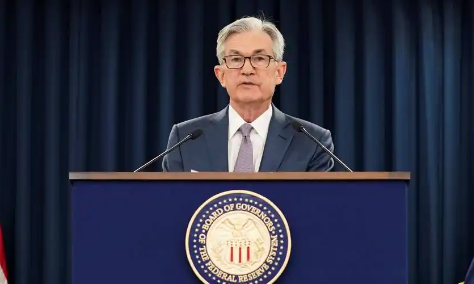
The US dollar fluctuated in a range close to a two-month high on Thursday after Federal Reserve Chair Powell maintained his cautious stance on rate cuts, while the Bank of Japan kept interest rates unchanged but raised its inflation forecast. With the uncertainty of Trump's tariffs gradually fading, July is expected to be the first month this year for the US dollar to achieve positive monthly growth. According to a previous article by Jianwen, after the two-day monetary policy meeting, the Bank of Japan unanimously voted to keep the short-term interest rate unchanged at 0.5%, but raised its core consumer inflation forecast for the current fiscal year from 2.2% three months ago to 2.7%. After the resolution was announced, the Japanese yen experienced short-term fluctuations and then rose significantly, appreciating 0.5% against the US dollar to 148.78. Overnight, at the FOMC press conference, Federal Reserve Chair Powell did not provide guidance on a rate cut in September, stating that tariffs and inflation remain highly uncertain and it is too early to predict a rate cut in September. The US dollar index has stabilized around 99.7, not far from the two-month high set in the previous trading day, with a cumulative increase of approximately 3.2% this month. The market focus has now shifted to the August 1st tariff deadline, when countries that fail to reach a trade agreement with the United States will face high tariffs. The hawkish stance of the Federal Reserve supports the strengthening of the US dollar The strong performance of the US dollar this month is mainly attributed to the hawkish stance of the Federal Reserve and the resilience of the US economy. According to a previous article by Jianwen, the initial annualized quarter-on-quarter reading of the US real GDP in Q2 was 3%, which was better than expected. A few hours later, Federal Reserve Chair Powell reaffirmed that it was too early to cut interest rates. This statement further boosted the US dollar. Rodrigo Catril, senior currency strategist at National Australia Bank, pointed out: "We are seeing the classic correlations still at play. The hawkish Federal Reserve has pushed up short-term yields and the US dollar. The stock market is under pressure, and the credibility of the Federal Reserve may also be strengthened as the market believes that the Fed chair is still in control." The US dollar has not only consolidated its position but also gained a certain upward momentum. Earlier this year, Trump's chaotic tariff policies and concerns over the decline of the US dollar weakened the currency, causing it to experience its worst beginning of the year since the floating exchange rate era. These concerns have now abated, easing the pressure on the US dollar. Other major currencies were generally under pressure Against the backdrop of a strong US dollar, other major currencies are generally under downward pressure. The euro rose 0.1% to $1.1412, but had previously slipped to a seven-week low in the previous trading day. It has fallen 3.2% this month. The pound has been hovering near a two-and-a-half-month low, recently trading at $1.3255, with a monthly decline of nearly 3.5%. The Australian dollar rose 0.3% to $0.6454, but had dropped by more than 1% on Wednesday and has fallen nearly 2% this month. The New Zealand dollar rose 0.3% to $0.5912, but is expected to fall by about 3% this month. Risk Warning and Disclaimer The market involves risks. Please invest with caution. This article does not constitute personal investment advice and has not taken into account the individual user's specific investment objectives, financial situation or needs. Users should consider whether any opinions, views or conclusions in this article are suitable for their specific circumstances. Any investment made based on this is at your own risk.
2025-07-31 -
View detailsThis is what Goldman Sachs considers "the greatest risk to the US economy and market".
On July 29th, Jan Hatzius, the chief economist of Goldman Sachs, released a report stating that despite high real estate valuations, the risk of financial imbalances in the private sector, including households and businesses, remains relatively low. In contrast, the fiscal situation of the public sector poses a more significant medium - and long-term threat. Fiscal sustainability: The Biggest challenge for the United States in the Medium and long Term If the scale of national debt and the corresponding interest expenses grow to a large enough extent, at that time, merely to stabilize the debt-to-GDP ratio, the government will be required to maintain a large-scale fiscal surplus for a long time, which is politically unsustainable. Goldman Sachs particularly emphasized that at a starting point where asset valuations are already high, the destructive impact of such a shock could be even greater. The bank's portfolio strategist model shows that the reasonable price-earnings ratio (P/E) predicted by the model is 20.7 times, while the current actual level is 22.4 times, which is much higher than the average of 15.9 times since 1990. High real estate prices are not a concern, and the debt risk of the private sector is controllable They believe that the current high housing prices mainly reflect the persistent imbalance between supply and demand of single-family homes, rather than loose loan standards or speculative purchases - the latter would trigger real financial stability issues. Meanwhile, data shows that loose credit is not the main driver of this round of housing price hikes. The median credit score of borrowers at the time of mortgage issuance is still slightly higher than that in the years before the pandemic. Firstly, regarding the concern over a persistently low savings rate, the Goldman Sachs model indicates that a low savings rate ultimately depends on fundamental factors such as the level of household wealth. In terms of corporate debt, although corporate interest expenses have risen significantly in recent years, the consequences still seem limited to this day. Risk Warning and Disclaimer
2025-07-30 -
View detailsTrump tariffs stirred up the foreign exchange market, and UBS stopped selling foreign exchange derivatives to customers.
Ubs has asked its employees to reduce the sale of complex foreign exchange derivatives. On Tuesday, July 29th, media reports citing three people familiar with the matter said that UBS has informed its client managers to stop promoting a complex foreign exchange derivative called the "Range Target Profit Forward Contract" (RTPF for short) to most clients. The underlying reason is that the high tariff policy announced by Trump in early April caused significant fluctuations in the US dollar, resulting in huge losses for many RTPF products invested by UBS clients. This also forced UBS to urgently halt the sales of such products and even compensate over 100 clients to soothe their emotions and restore their reputation. Doubts from the outside world about the sales behavior of these products and whether they are suitable for customers are constantly heating up. RTPF: Limited returns, unlimited losses, only suitable for those with a high-risk preference RTPF is a structured foreign exchange product specifically designed for high-net-worth clients. Its operating principle is similar to this - the client and the bank agree that as long as the exchange rate of the US dollar against the Swiss franc remains within a certain range, they will exchange currencies at a fixed interest rate. If the exchange rate deviates from this range, the contract will still be enforced. The result is that customers may continuously exchange foreign currency at extremely unfavorable exchange rates, resulting in significant losses. This product is inherently high-risk and was supposed to be sold only to professional investors. Currently, it is restricted or strictly regulated in the UK, Spain, and several other Asian markets. However, some of UBS's clients are not "experts". Even some clients used the money from mortgaged properties to invest without understanding the risks, which is extremely risky. A UBS client disclosed that his client manager recently emphasized that such high-risk structured foreign exchange products (such as RTPF) should now be limited to "the most professional" investors and that product suitability needs to be subject to more rigorous review. This customer said that the account managers who used to actively promote products have now become much more cautious: "This time, he didn't even bring any materials; he just came to 'chat'." He said they had been informed that they would no longer actively promote these products. Another person familiar with the matter added that UBS is still selling such products, but on a significantly reduced scale. After Trump's tariff announcement, the US dollar depreciated rapidly, and many RTPF contracts triggered loss conditions. Ubs's clients were forced to continuously exchange currency at the spread rate, and some clients suffered "unforeseeable" high losses. Ubs was forced to activate its crisis management mechanism, stop promoting such products to the majority of clients, pay "goodwill compensation" to over 100 clients, initiate internal reviews and risk assessment training, examine the sales behavior of at least six client managers, and have been in contact with affected clients since the beginning of this year. Risk Warning and Disclaimer The market involves risks. Please invest with caution. This article does not constitute personal investment advice and has not taken into account the individual user's specific investment objectives, financial situation or needs. Users should consider whether any opinions, views or conclusions in this article are suitable for their specific circumstances. Any investment made based on this is at your own risk.
2025-07-29 -
View detailsThe whole world was beaten in the face! Under the tariff, why didn't stagflation come and the dollar fell?
Ruchir Sharma, the chairman of Rockefeller International and a renowned investor, recently wrote an article pointing out that despite the Trump administration's significant increase in tariffs, the US dollar not only failed to appreciate as expected, but also suffered its most severe decline in half a year since the early 1970s. Meanwhile, the expected "stagflation" effect - a slowdown in economic growth accompanied by rising inflation - has not been clearly reflected in the macro data. Tariff revenue grew at an annual rate of 300 billion US dollars, about four times that of the same period last year, but the US economy remains resilient. Expectations fell through: The US dollar weakened rather than strengthened The article points out that the effective tariff rate in the United States has risen from 2.5% to 15%, but the US dollar has not risen but fallen instead, experiencing the most severe decline in half a year since the early 1970s. This unexpected trend is now attributed to the historic overvaluation of the US dollar at the beginning of the year. Many foreign investors once held large amounts of US dollar assets, but recently they have begun to hedge against these risks and invest more outside the United States. The artificial intelligence craze offsets the negative effects of tariffs Since January this year, the projected annual spending of tech giants on artificial intelligence infrastructure has increased by 60 billion US dollars to 350 billion US dollars. A large number of small and medium-sized enterprises are also competing to ride this wave, further promoting economic growth. This widespread optimism has effectively neutralized the possible decline in investment confidence caused by the uncertainty of trade policies. Corporate tax reduction and exemption buffers the cost of tariffs Despite this, the negative economic impact of tariffs has indeed begun to emerge, mainly reflected in the price hikes of household appliances, sports goods and toys. According to economists' estimates, foreign exporters actually bear 20% of the tariff costs - much higher than the proportion during Trump's first term, while the remaining 80% is roughly evenly distributed among American businesses and consumers. The overall inflation rate remains suppressed by the decline in rents and the fall in prices of other goods such as used cars and energy. These price drops have nothing to do with tariffs. Used car prices are still falling from the highs caused by supply disruptions during the pandemic. Sharma wrote: Sharma believes that the current situation to some extent repeats the scenario of 2023. At that time, many people expected that the Fed's interest rate hikes would significantly slow down the growth of the US economy, only to find that its impact was offset by the artificial intelligence spending boom and the continuous fiscal support from the US government. Risk Warning and Disclaimer
2025-07-28 -
View detailsThe more Trump puts pressure on Powell, the less likely the Fed is to cut interest rates.
Mackintosh, through in-depth analysis of market data and policy mechanisms, revealed a seemingly contradictory phenomenon: the more openly Trump pressured the Federal Reserve, the more difficult it was for him to achieve his goal of cutting interest rates. The article holds that this dispute essentially reflects the fundamental divergence between institutional independence and populism. The article emphasizes that the core of this conflict lies in the collision of two completely different governance concepts. Trump's view embodies the populist idea that "the voice of the people is the voice of God", while the Federal Reserve is just the opposite. Its original design intention was to be independent of daily politics. The article conducts an in-depth analysis of the institutional issues behind this dispute. Mackintosh believes that the differences between the White House and the Federal Reserve "at the highest level are a contest between institutions and populism", and the core issue is whether expert institutions can manage economic policies better than elected politicians. The current futures market indicates that the possibility of a rate cut next week is almost zero, and the probability of a rate cut in September is approximately 60%. The more politics intervenes in interest rates, the more likely inflation is to fluctuate, and investors will demand more compensation for long-term investments. The lesson from this historical case is profound: When the market believes that monetary policy makers can operate independently of political pressure, their concerns about future inflation will decrease, and they will thus be willing to accept lower long-term interest rates. This is precisely the goal that Trump aims to achieve, but his pressure strategy might have the opposite effect. Mackintosh also corrected Trump's misunderstanding in the article about the relationship between interest rate cuts and mortgage loans. Trump complained, "People can't afford to buy houses because this guy (Powell) is a fool. He keeps interest rates too high, possibly for political reasons." The article points out that "There is a loose connection between the Federal Reserve's interest rate and mortgage rates in the long term, but they may fluctuate significantly in opposite directions, especially when the market believes that the Federal Reserve is making a mistake." Inflation concerns and policy considerations The Trump administration and the Federal Reserve have differences over the economic effects of tariffs. The administration expects tariffs to have little impact on prices, while the Federal Reserve, "having suffered from missing out on inflation booms during the Biden administration," is waiting to see if tariffs will push up prices before restarting interest rate cuts. However, he also admitted that monetary policy is not a science and there is every reason to support interest rate cuts starting from next week. The key point is that the reasons for the interest rate cut should be based on economic data rather than political pressure. The article lists the economic indicators that support interest rate cuts: Let professionals argue the rationality of the interest rate cut Mackintosh warned in the article that the same problem would arise if Trump tried to dismiss Powell for reasons before his term ended in May next year, or if some Republicans changed the laws governing the Federal Reserve to make it submit to congressional pressure. Investors would expect politicians to take shortcuts and prefer to accept a little inflation to boost growth, especially before elections, which would push up bond yields. It is clearly understandable that Trump was frustrated by Powell's delay in cutting interest rates. But rather than attacking the higher bond yields brought about by the independence of the Federal Reserve, it is better to wait.
2025-07-25 -
View details"Investment for 15% tariff"! Trump's "tariff model" has been in winning numbers
The US-Japan trade agreement provides a template for other countries to negotiate, but it also increases the pressure on them to reach an agreement before the "tariff deadline" on August 1. According to CCTV news, Japan and the United States have reached an agreement on tariffs, and the United States will impose a 15% tariff on Japan and increase imports of American rice. The agreement also includes Japan's commitment to invest $550 billion in the United States. According to the agreement, the United States also asked Japan to buy 8 billion dollars of American goods, including corn, soybeans and fertilizers, 100 Boeing aircraft and more defense equipment. The analysis pointed out that although the agreement lacked the details of traditional texts and was mainly published through official statements and social media, it set a "template" for partners such as the European Union and South Korea, prompting them to speed up negotiations to win tariffs below the threat level and exchange concessions through similar investment and procurement commitments. Does the US-Japan agreement establish the "investment for tariff" model? EU may lock in 15% tax rate. The agreement between the United States and Japan sets most Japanese export tariffs at 15%, which is lower than Trump's previous threat of 25%, and innovatively incorporates investment commitments. The White House said that Japanese banks and financial institutions would inject $550 billion into an investment fund, which Japanese Prime Minister Shi Pomao said would be operated through loans and guarantees. U.S. Commerce Secretary Lu Tonuk also added that the investment fund will also involve equity investment, and the United States will lead the project selection and implementation, and the profits will be distributed to 90% of American taxpayers and 10% of Japanese. Sen. Bill, the ambassador to Japan during Trump's first term and a Republican senator, called it an "unprecedented structure": ""They are working out a huge financing plan. So this is not foreign investment, but a financing plan. We will choose the best (projects) and let people compete for these projects. " On Wednesday, two senior Trump administration officials hinted in media interviews that in order to facilitate a trade agreement, the EU should "learn from Japan" and exchange financing forms such as investment for more favorable tariff treatment from the US. A person familiar with the matter told the media that after the United States and Japan reached an agreement, European officials were more likely to accept the idea that they might also impose a 15% benchmark tariff. The agreement with Japan shows that the tariff level of 15% can be applied to most major trading partners of the United States. Wall Street has previously mentioned that the media quoted insiders as saying that the United States and the European Union are close to reaching an agreement. According to this agreement, the United States will impose a 15% tariff on the European Union, similar to the trade agreement reached between the United States and Japan. The tax rate of 20% may become a "benchmark", and the EU and South Korea accelerate the pace of negotiations. Experts believe that the US-Japan trade agreement sets a tariff benchmark of "below the prohibitive level". William Reinsch, senior consultant of Center for Strategic and International Studies and former official of the Ministry of Commerce, said: "More broadly, the goal of many foreign governments is to keep this figure below the forbidden level-25% to 35% will prevent most trade. If it is controlled below 20%, enterprises can cope. " Many geopolitical advisers predict that the EU and South Korea will step up their efforts to reach an agreement, especially in the field of automobiles. Owen Tedford, a senior analyst at Beacon Policy Advisors, predicts that the pace of announcement of the agreement may accelerate in the days before August 1. Owen Tedford analyzed that: "If I were the EU, 10% of my hopes would have been dashed, and 15% would be the focus; If I can copy the Japanese agreement, it will be a victory. " Industry tariff negotiation space appears Analysts pay special attention to Japan's successful negotiations on tariff reduction in the automobile export industry. Tariffs in these industries have always been the main crux of many trade negotiations, including tariffs on automobiles, 50% tariffs on aluminum and steel, and pending tariffs on pharmaceuticals and semiconductors. Japan's successful reduction of automobile export tariff from 25% to 15% highlights the Trump administration's flexibility in this field and provides reference for other countries. Monica Gorman, a former White House and Ministry of Commerce official and managing director of Crowell Global Advisors, pointed out that this shows that the Trump administration is willing to negotiate industry tariffs: "Other countries, including the European Union, will almost certainly notice this." Reinsch also added that historical precedents also support this flexibility: Trump planned to impose tariffs on steel and aluminum during his first term, and later reduced it through quotas and bilateral agreements. Although the agreement emphasizes "buy America" and investment commitment, trade veterans are cautious. Reinsch said that the past history of such commitments shows that "the number has changed from big to small", and many of them are repackaged for established plans, which have limited impact on the real economy. The White House sees these as tools to revive American industry, but analysts are still waiting for more details to assess sustainability. Risk warning and exemption clause The market is risky and investment needs to be cautious. This paper does not constitute personal investment advice, nor does it take into account the special investment objectives, financial situation or needs of individual users. Users should consider whether any opinions, viewpoints or conclusions in this article are in line with their specific situation. Invest accordingly at your own risk.
2025-07-24 -
View detailsRaymond Yue, President of the Hong Kong Monetary Authority: The cooling of the stable currency still needs to be strengthened
Yu Weiwen said that it is necessary to prevent excessive speculation on stablecoins by the market and public opinion. Recently, the following phenomena deserve attention. The first is excessive conceptualization. Yu Wai-man disclosed that, taking the experience of Hong Kong as an example, up to now, dozens of institutions have proactively reached out to the team of the Hong Kong Monetary Authority. Some have explicitly expressed their intention to apply for stablecoin licenses, while others are in a preliminary exploratory nature. However, many remain at the conceptual stage, such as proposing visions to enhance the efficiency of cross-border payments, support the development of Web3.0, and improve the efficiency of the foreign exchange market. But they lack practical application scenarios and are unable to put forward specific and feasible solutions and implementation plans, let alone possess the awareness and ability to manage risks. Some institutions that can provide application scenarios themselves lack the technology to issue stablecoins and the experience and ability to manage various financial risks. Yu Weiwen suggested that there could be multiple models for participating in stablecoins. For such institutions, a more practical approach seems to be to cooperate with other stablecoin issuers to provide application scenarios rather than pursuing to be the issuer. Yu Wai-man reaffirmed that the Hong Kong Monetary Authority had made it clear earlier that only a few stablecoin licenses would be issued in the initial stage, and advised investors to remain calm and think independently while digesting the so-called "positive" news in the market. In addition, Yu Wai-man said that a summary of the "Stablecoin Issuer Licensing Regime" will be released next week. The document will elaborate on the arrangements of the Hong Kong Monetary Authority for accepting and processing license applications. The market involves risks. Please invest with caution. This article does not constitute personal investment advice and has not taken into account the individual user's specific investment objectives, financial situation or needs. Users should consider whether any opinions, views or conclusions in this article are suitable for their specific circumstances. Any investment made based on this is at your own risk.
2025-07-23 -
View detailsAccelerate the embrace of digital assets! JPMorgan Chase explores mortgage loan business in digital currency.
Jpmorgan Chase is considering accepting loans from customers using cryptocurrencies as collateral, which is a major signal that the largest bank in the United States is beginning to recognize the move of digital assets into the mainstream financial system. On Tuesday, July 22nd, media reports citing informed sources revealed that jpmorgan Chase may start directly accepting crypto assets such as Bitcoin and Ethereum as loan collateral as early as next year. At present, the relevant plans are still in progress and can still be adjusted. In contrast, rivals such as Goldman Sachs have not yet accepted cryptocurrencies as collateral. This policy shift is of great significance to jpmorgan Chase CEO Jamie Dimon. Eight years ago, Dimon denounced Bitcoin as "fraud", claiming that it "would eventually collapse" and would only be useful to drug dealers and killers. Insiders said that Dimon's early fierce criticism of Bitcoin has alienated some potential customers who have profited from crypto assets or have long been optimistic about its potential. Not only jpmorgan Chase, but the entire traditional financial industry is accelerating its integration with crypto assets. As the second Trump administration leans towards more lenient regulatory policies than the Biden administration, the shift in Washington's attitude towards cryptocurrencies is driving more banks to embrace digital assets. The CEO of jpmorgan Chase has changed his stance According to informed sources, Dimon had previously strongly criticized Bitcoin and even threatened that traders who traded in it would be fired, which has angered some potential clients who have become rich through cryptocurrencies or have long been optimistic about its value. But recently, Dimon's remarks have softened somewhat. In May this year, he said, "I don't think you should smoke, but I defend your right to smoke." I defend your right to purchase Bitcoin. Just do it. Jpmorgan Chase has previously begun to embrace cryptocurrencies and plans to allow the use of cryptocurrency ETFs as collateral for loans. If direct cryptocurrency assets are accepted as collateral in the future, it will be a further breakthrough. Financial institutions are accelerating their layout, and the regulatory environment provides assistance Behind this trend lies the loosening of the regulatory attitude in the United States. The second Trump administration tended to adopt more lenient regulatory policies than the Biden administration, which prompted more banks to reevaluate their digital asset strategies. Morgan Stanley is considering offering cryptocurrency trading services through the ETrade platform. In addition, the US Congress has also recently sent out positive signals. The US House of Representatives passed a stablecoin regulatory bill last week, marking the first major crypto legislation approved by the US Congress. Large banks have welcomed the bill, believing that it will make it easier for them to conduct digital asset business. Unlike cryptocurrencies such as Bitcoin that are not backed by underlying assets, stablecoins are pegged to assets like the US dollar. Technical and compliance challenges still need to be addressed Despite the recovery of market sentiment, banks still face practical difficulties in promoting crypto lending business. On the one hand, crypto assets may be used for illegal transactions, which requires banks to enhance their anti-money laundering and compliance mechanisms. On the other hand, if a client defaults, how to liquidate crypto assets is also a major technical obstacle. Like most US banks, jpmorgan Chase does not hold cryptocurrencies on its balance sheet. Therefore, it is more likely that jpmorgan Chase will collaborate with third parties to have its clients' crypto assets held in custody on its behalf. Companies like the crypto trading platform Coinbase offer such services. It is worth noting that although jpmorgan Chase has been reluctant to get involved in mainstream cryptocurrencies like Bitcoin in the past, it has actually been very active in the broader field of digital assets. As early as 2019, it launched one of the earliest bank-backed digital currencies in the industry. Risk Warning and Disclaimer The market involves risks. Please invest with caution. This article does not constitute personal investment advice and has not taken into account the individual user's specific investment objectives, financial situation or needs. Users should consider whether any opinions, views or conclusions in this article are suitable for their specific circumstances. Any investment made based on this is at your own risk.
2025-07-22 -
View detailsLow risk+high return! The number of corporate bond ETFs in China soared, increasing sixfold in half a year.
The Chinese bond ETF market is experiencing explosive growth. On July 21st, according to Bloomberg data, the asset management scale of China's bond ETFs has grown fivefold in just one and a half years, soaring from $10 billion in early 2024 to over $50 billion by the end of June this year. This growth rate is extremely rare in the global fixed-income ETF market. Corporate bond ETFs have stood out the most in this round of growth, with their number surging sixfold compared to the end of last year. They now account for more than half of the entire bond ETF market and have become the main driving force behind the overall scale expansion. Behind this growth boom lies a strong demand from investors for low-cost and highly liquid products. Corporate bond ETFs not only offer the advantage of a diversified investment portfolio, but also enable investors to access corporate bonds with higher yields, while avoiding the default risk of directly investing in a single bond. With policy support, technology bond ETFs have emerged as a powerful force Policy-level support has further promoted this trend. This year, the central bank has introduced special policies to support the financing of technology enterprises, which has led to a sharp increase in the issuance of technology bonds, and related ETF products have emerged as a result. As many as 10 technology bond ETFs were listed and traded in July this year alone. Among the eight technology bond ETFs launched at the beginning of the year, five made it onto the list of the top ten funds with the largest capital inflows in Asia in June. The ChinaAMC SSE Benchmark Market-Making Corporate Bond ETF topped the list with $2 billion in funds attracted, becoming a star product in the market. Qiu Wenzhu, a fixed income analyst at Huatai Securities, told the media, "Before last year, investors rarely talked about bond ETFs, but then we began to see an increase in demand." Bond ETFs have become a market hotspot this year. In addition, some bond ETFs have also acquired new functions. Under the pilot program launched in June, some bond ETFs can be used as collateral for short-term borrowing, which further enhances their appeal. Qiu Wenzhu added that private equity funds use such products to expand their investment in the inter-bank market, banks take this opportunity to diversify their investments in corporate bonds and convertible bonds, while the self-operated accounts of securities firms favor their flexibility and low cost. However, this investment frenzy has also raised market concerns about potential risks. Some analyses suggest that if bond ETFs themselves become a form of overheated trading, it may intensify the price fluctuations of their underlying assets, leading to extremely large-scale buying or selling. "The expansion of the ETF market is likely to lead to an increase in the volatility of the entire credit market," wrote Sun Binbin, an analyst at Caitong Securities, and others in a report on July 8. Risk Warning and Disclaimer The market involves risks. Please invest with caution. This article does not constitute personal investment advice and has not taken into account the individual user's specific investment objectives, financial situation or needs. Users should consider whether any opinions, views or conclusions in this article are suitable for their specific circumstances. Any investment made based on this is at your own risk.
2025-07-21 -
View detailsSo far, the strongest "July interest rate cut" call, Waller publicly voiced, and the differences within the Fed intensified.
On July 17th, when delivering a speech in New York, Federal Reserve Governor Waller was outspoken, stating that interest rates should have been cut at the July decision and should not have been lowered only after the labor market deteriorated. San Francisco Fed President Daly, in an interview, reaffirmed that it is reasonable to cut interest rates twice this year and warned that if they wait until inflation fully reaches the 2% target before taking action, "it is very likely that completely unnecessary harm has already been caused to the economy." These new remarks indicate that Trump's tariff and fiscal policies are causing the Fed's policymakers to be increasingly divided on the issue of interest rate cuts: for some hawks, is it appropriate to lower interest rates now? Moderates advocate adopting a wait-and-see attitude in uncertain situations. Some policymakers believe that the job market shows signs of weakness, and overly focusing on current inflation fluctuations may miss the best opportunity to support the economy, thereby bringing unnecessary risks. Combining all kinds of software and hardware data, what I see is a labor market on the verge of danger. The economy is still growing, but its momentum has significantly slowed down, and the risks to the FOMC's employment mission have increased. Policy makers cannot wait forever, because if we wait until inflation clearly reaches the 2% target, we are likely to have already harmed the economy in a completely unnecessary way. She believes that currently, enterprises are still bearing the costs brought by tariffs and consumer spending remains stable, which gives the Federal Reserve the space to maintain interest rates as inflation moves towards its target. However, this does not mean that interest rate cuts should be postponed indefinitely. However, not all officials hold a lenient stance. He emphasized that although the inflation data over the past few months has performed well, the latest CPI report might signal the arrival of a "turning point". Therefore, he clearly stated: On the same day, Federal Reserve Governor Kugler also expressed a similar view, believing that the central bank should keep interest rates stable "for a period of time". She said at an event: Kugler also cited the latest data to predict that the year-on-year growth rate of PCE data might rise from 2.3% in May to 2.5% in June. According to her analysis, due to the overstock of enterprises and the frequent changes in trade policies, the greater impact of tariffs on prices may not have been fully reflected yet. I expect these influences to intensify in the coming months. It is entirely appropriate to maintain such a moderately restrictive monetary policy stance. The divergence of views among officials was already reflected in the latest economic forecast released by the Federal Reserve in June. (Dot plot in the Fed's June SEP) (The expected interest rate cut in September is only slightly above 50%.) Risk Warning and Disclaimer
2025-07-18